
When a curator presses play on your track, they have already formed an impression of how it sounds before the chorus arrives and before starting to read your pitch. If your vocal is lost in the mix, and the kick is swallowing the bass, those first impressions are hard to get past. This can happen to well written songs that have real potential.
Groover curators and pros have collectively fed back on tracks more than 4 million times – they have heard every kind of mix there is. They can tell early into a track whether it’s ready or not.
So, what does “release ready” actually mean?
A release ready track sounds good on any system that a listener may be using. The track should be consistent across different streaming platforms and services, and it should be heard without any technical issues impacting the listener’s experience.
Release ready is not the same as loud
Historically the goal was always to be louder than the track played before. Throughout the 90s and 2000s this even had a name; the Loudness Wars. Where records were pushed harder and harder so they would stand out on the radio and CD.
Streaming came along and ended that, by measuring the loudness of every track and adjusting the playback to -14 LUFS. LUFS (Loudness Units relative to Full Scale) is a way of measuring how loud a track actually sounds to us across its whole length, not just at its loudest moment. The numbers run below zero, so the closer to zero, the louder the track. -8 LUFS is a lot louder than -14. If your master is louder than -14, Spotify turns it down.
Louder no longer wins attention, and can even work against you. The damage from the extra limiting used to make the master loud becomes clear once the track is turned down by the service. This can lead to the song having less punch than a more dynamic track that is next in the play queue.
Spotify recommends keeping your true peak below -1 dBTP, and below -2 dBTP if your master is louder than -14 LUFS, because louder tracks are more likely to pick up extra distortion when they are converted for streaming. dBTP stands for decibels true peak, which is the absolute highest point your audio hits. Leaving some room below zero stops those peaks from distorting.
Other platforms use their own targets. Apple Music, for example, is widely reported to sit around -16 LUFS. If you want the full picture, we have written a detailed guide on which LUFS level to master at.
The main takeaway is that release ready is about balance and control, not volume.
What release ready sounds like
Whatever the genre, release ready tracks have a few things in common. Let’s go through them.
Soundsystem translation
It sounds good on headphones, a laptop, a phone speaker, a car… wherever. If the bass completely disappears when listening on small speakers or the vocal is too prominent when listening on headphones, the mix is not there yet.
The lead cuts through
You don’t want the listener to strain to listen to the most important part of the track. This is usually the vocals, or a prominent instrument based hook.
The low end is under control
Kick and bass work together rather than fighting over the same space. A muddy low end is one of the most common reasons a track sounds amateur.
It survives the mono test
Some playback systems combine the left and right channels. If key parts vanish when that happens, listeners on those systems will hear the song in a way they are not intended to.
Nothing clips or distorts
Clips and distortion can really throw a listener and are worth avoiding for obvious reasons. Unless, of course, these are used for creative purposes.
What this list makes clear, is that most of these are mix problems, and not mastering problems. Mastering can polish a good mix, but it cannot rebalance a flimsy vocal, or untangle clashing kick and bass guitar. If your mix is not right, then your master is not going to be right either.
How to tell if your track is ready
When you have listened to your work in progress track for weeks your ears begin to adjust and compensate for its faults. Here are three checks you can use to help you hear it the way a curator will.
Take a break
Leave it a day or so and then play it on the worst speaker you own, and then the best. Write down notes about what you like and dislike when listening on these different systems.
Compare your track
Pick a track that you love that you feel matches your genre and style and switch between your track and this track. Any differences in tone, width and low end will become clear pretty quickly.
Get an objective check
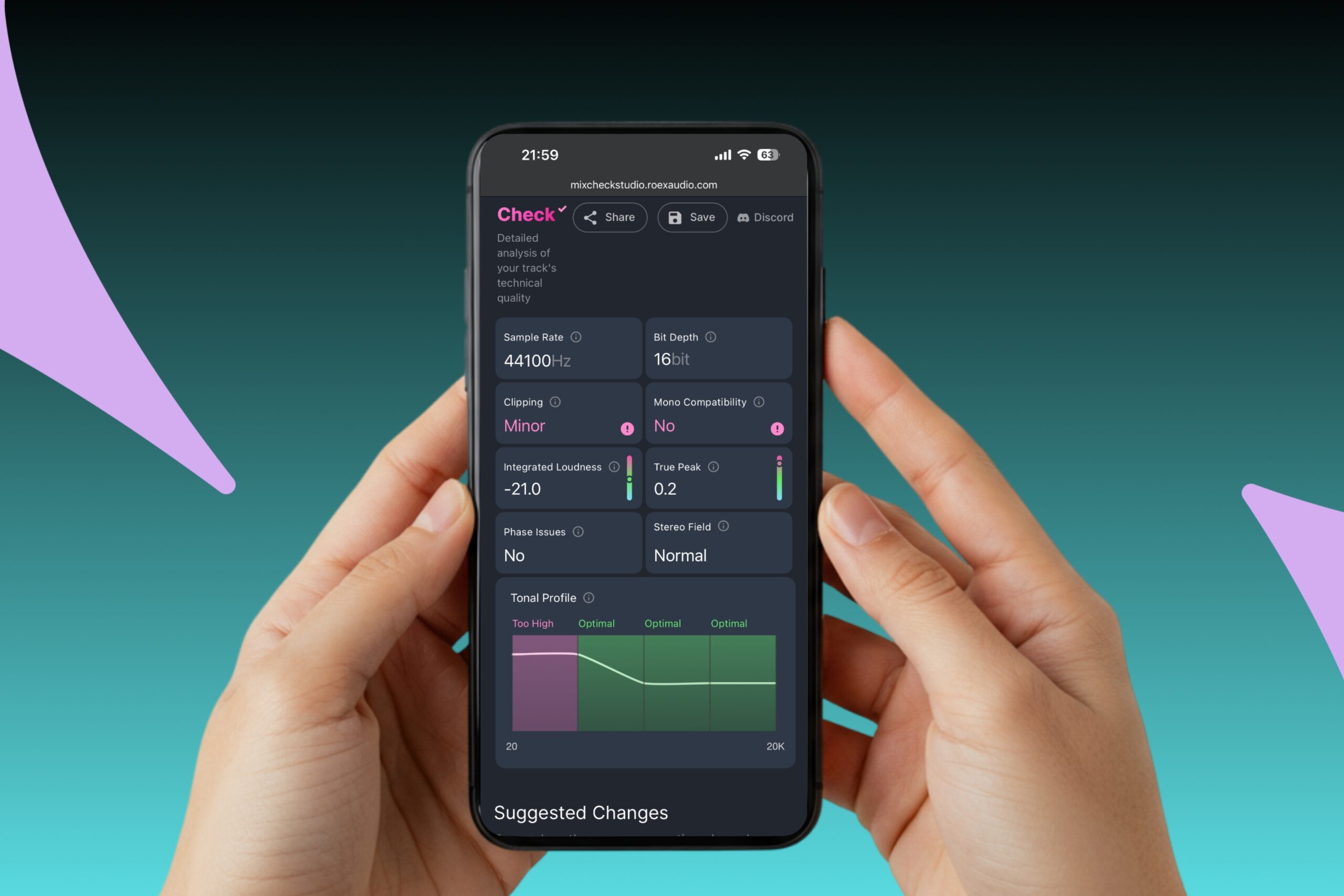
Mix Check Studio analyses your finished mix for free and reports on tonal balance, loudness, dynamics, stereo width and mono compatibility, so you know what to fix before a curator hears it.

If the check points to problems in the mix itself, RoEx Automix mixes and masters your track from the individual stems, and you can preview the result before paying to download. Once you have a solid mix, mastering has the right ingredients to work with.
FAQ
Do I need mastering to be release ready?
Yes, in almost every case. Mastering sets the final level, tone and peak control for streaming. But it works best on a mix that is already balanced, so make sure the mix is right first.
What loudness should a release ready track be?
Around -14 LUFS integrated, with true peak below -1 dBTP, works cleanly on Spotify and most major platforms. Some genres suit a denser master, but going louder will not make your track sound louder on Spotify.
Can a curator tell if a track is not professionally mixed?
Usually, yes, and quickly. Curators listen to a lot of music, so balance problems, harsh top end or a crushed master stand out within seconds. Getting the sound right means their feedback can focus on the song itself.
Groover guarantees that every curator you contact will give you written feedback within 7 days, or your credits come back. Make sure what they hear is your best work.