
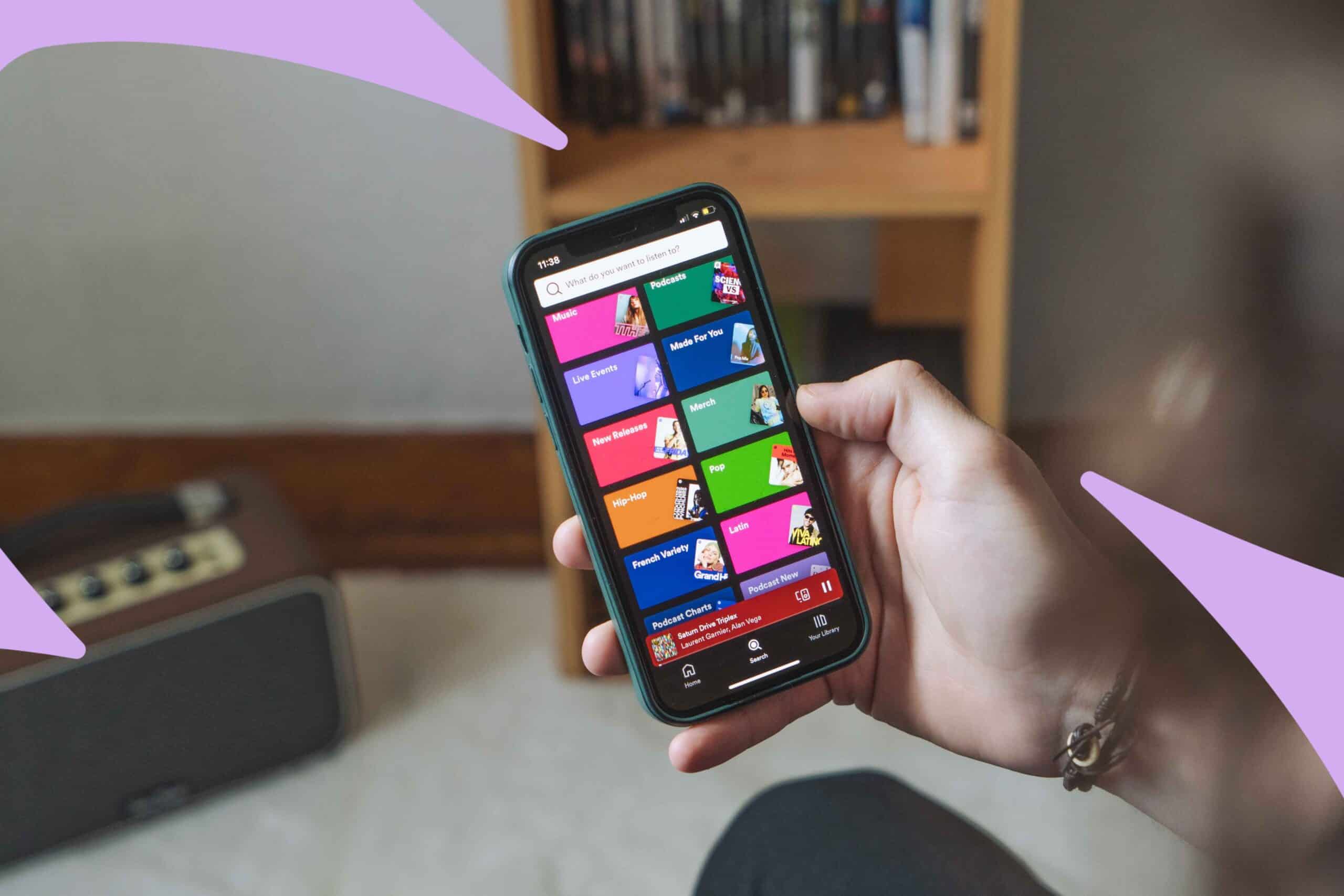
Spotify has introduced a new DJ tool along with the removal of 75 million low quality or AI created music. In other words, in an effort to tidy up the site’s catalog and make space for authentic musicians, Spotify has created these tools for DJs. Let’s explore what this means for you and how you can use this to enhance the circumstance for your music when you launch your next release.
🌀 Your song in a DJ’s workflow
Spotify’s new DJ functionality acts as a bridge between two different worlds: streaming and live mixing. It does not allow DJs to mix directly from Spotify during performances (licensing still prohibits that), but Spotify is turning into a creative prep tool for DJs.
A DJ will begin creating a set by launching software such as Rekordbox, Serato, or Traktor with immediate access to their Spotify playlists directly inside that program. In their software, the DJ is then able to evaluate possible transitions between tracks while analyzing the BPMs and overall energy flow of the two tracks, then determine where within the other track’s flow your track best fits. The DJ can easily identify the drop in your track, set cue points to locate it quickly and then determine if your track is better suited for the beginning of the set, the middle or even towards the end of the set without having to make any purchases/downloads related to it yet.
🧹 A cleaner catalog = more visibility
Spotify has taken down about 75 million tracks, mostly AI-made spam, repeat uploads, or quick low-quality releases designed to cheat the algorithm.
Spotify’s actions are meant to:
1) Remove the noise
2) Elevate the rightful catalogs
3) Enhance the recommendation system
4) And give assurance to the artists’ credibility
When the platform discards millions of non-creative tracks, a curious thing happens: your song becomes more discoverable. There is less competition, less clutter, and less confusion for algorithms. Authentic artists are given more chances to be seen. Just like spring cleaning, but this time it’s a house with 100 million rooms.

🔍 How algorithms read your music
This transition is not only about DJ tools or deleted songs. Spotify is changing the way musicians are discovered (quietly). Algorithms benefit from transparency. When a large part of the platform is just noise, everything takes longer to process. But when the mess is removed, the system can easily understand who the real artists are and recommend them.
Two musicians. Identical genre. Identical level. One is lost in a chaos of non-live AI tracks and unorganized metadata. The other has a neat catalog with some handpicked mentions online. Can you tell who goes up?
Spotify reads signals, and at this moment, the most powerful signals come from real humans.
📈 Optimize so the system can see you
View this situation not as an upheaval, but as a purification.
Here’s how to take advantage of it:
1️⃣ Purge your catalog.
Remove all duplicates and “just because” half-finished demos.
2️⃣ Improve metadata.
Duration, style, mood, feeling, and people involved all matter now.
3️⃣ Good music no more.
Spotify now favors beautifully produced and well thought-out releases.
4️⃣ Present your songs the right way.
Submissions through Spotify for Artists are more powerful than ever.
Your music must not only be there it must be understandable to both humans and machines.
🤝 Where Groover connects the dots
Here is what most artists miss: Spotify isn’t built only on streams. It’s built on signals. Every playlist add, blog feature, review, radio spin, or curator comment becomes a digital trace of your name and that’s exactly what helps algorithms recognize you.
Groover provides you with direct access to the creators of those signals. We connect you with true professionals, including radio hosts, journalists, curators, and playlist editors, who are seeking new music. As you receive feedback/reviews and add songs to your playlist, you generate small signals that help inform algorithm decision-makers as to which songs should be added to playlists. More importantly, since Spotify is now even more selective/clean in what gets added to playlists, those small signals mean even more than before.
🌱 Small seeds, big momentum
Spotify visibility multiplies. When your track gets picked up in a DJ prep playlist, it can end up in a livestream mix, then in a user playlist, then in a curator submission. One small placement can trigger more. Now that the platform has cleared out millions of fake tracks, that snowball rolls even faster.
🚀 A better Spotify for real artists
To sum it up:
- Spotify is entering a new phase: giving advantage to artists who take their releases seriously.
- The new DJ integration gives your tracks extra pathways to travel.
- The AI purge gives your music more room to breathe.
- And the combination of human curators + algorithmic clarity offers you the best chance in years to be discovered.
So for your next release, ask yourself:
👉 In a cleaner Spotify, what signals am I sending and who is amplifying them?